CONSULATUL ONORIFIC AL REPUBLICII MOLDOVA
HONORARKONSULAT DER REPUBLIK MOLDAU - HONORARY CONSULATE OF THE REPUBLIC OF MOLDOVA
CARINTIA-KÄRNTEN-CARINTHIA
CONSULATUL ONORIFIC AL REPUBLICII MOLDOVA
HONORARKONSULAT DER REPUBLIK MOLDAU - HONORARY CONSULATE OF THE REPUBLIC OF MOLDOVA
CARINTIA-KÄRNTEN-CARINTHIA
În anii 2025/2026 s-a început achiziționarea țintită de exponate pentru expoziția etnografică permanentă a Consulatului Onorific. Un obiectiv important este autenticitatea operelor de artă, prin care sunt promovați în special artiștii și meșteșugarii contemporani din Republica Moldova.
₠
In den Jahren 2025/2026 wurde mit dem gezielten Ankauf von Exponaten für die dauerhafte Ethnographische Ausstellung des Honorarkonsulates begonnen. Ein großes Anliegen ist die Authentizität der Kunstwerke, wodurch insbesondere zeitgenössische Künstler:innen und Handwerker:inner in der Republik Moldau gefördert werden.
₠
In the years 2025/2026, the targeted acquisition of exhibits for the permanent Ethnographic Exhibition of the Honorary Consulate began. A major priority is the authenticity of the artworks, which particularly supports and promotes contemporary artists and artisans in the Republic of Moldova.
Realizat cu marea suținere Irinei Briceag de la Șezătoarea Basarabiei. ₠ Mit der großartigen Unterstützung von Irina Briceag von dem Verein Șezătoarea Basarabiei. ₠ With the wonderful support of Irina Briceag from the association Șezătoarea Basarabiei.
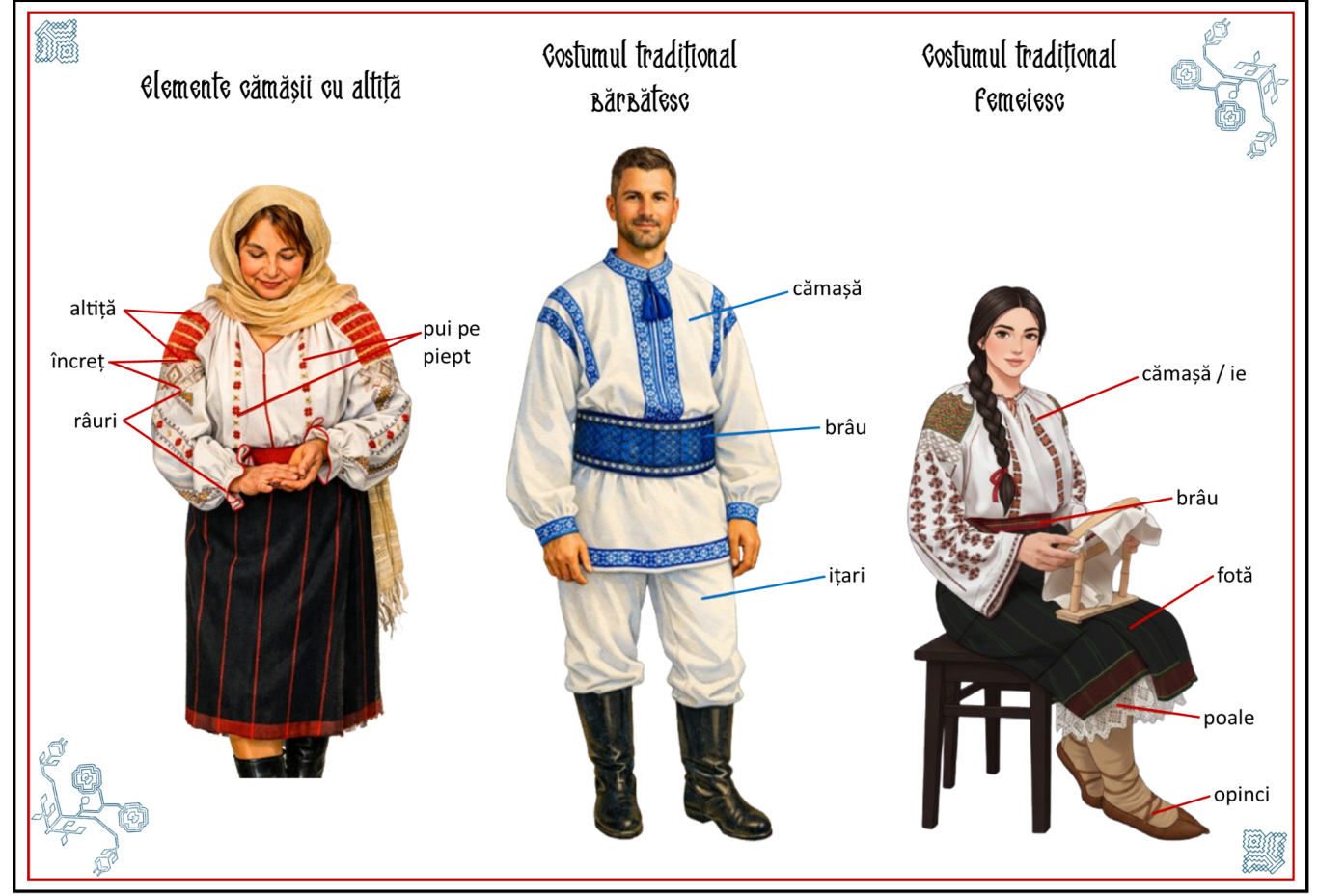
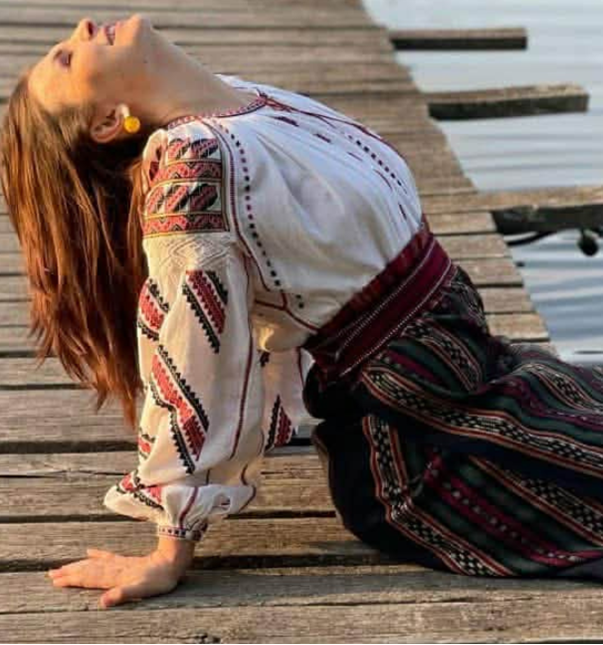
Die moldawische Tracht zeichnet sich durch feine Handstickereien, geometrische Symbole und die Verwendung natürlicher Materialien (Leinen, Wolle, Leder) aus.
Frauentracht:
Männertracht:
Portul popular moldovenesc se remarcă prin broderii geometrice fine, simbolistică străveche și utilizarea materialelor naturale (in, lână, piele).
Costumul femeiesc:
Costumul bărbătesc:
Moldavian national attire is recognized for its intricate geometric embroidery, ancient symbolic motifs, and reliance on natural materials like linen, wool, and leather.
Women's Attire:
Men's Attire:
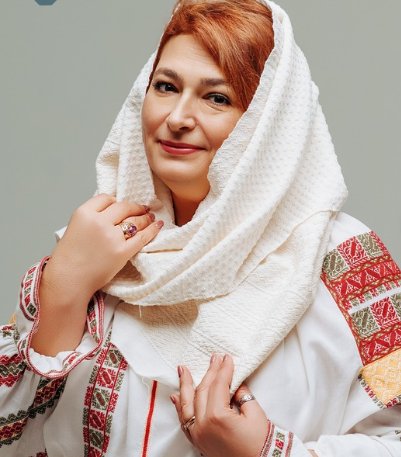
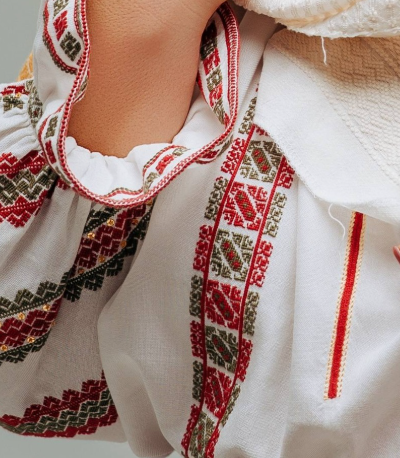
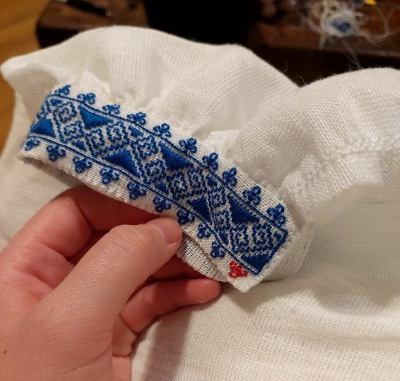
Cămașa este cusuta după originalul aflat în Patrimoniul Muzeului Național de Etnografie și Istorie Naturală a Moldovei. Aparține zonei de nord a Moldovei. In altiță sunt cusute module cu suveici și simboluri geometrice fitomorfe și zoomorfe. Încrețul este cusut in tehnica ațește cu fire de bumbac.
Predomină simbolul rombului, ce caracterizează bogăția pământului. Raurii de pe mânecă sunt costisati cu simboluri fitomorfe geometrizate. Este cusuta pe panza de casa cu fire mouline și fire din bumbac răsucit. S-au aplicat paiete suflate cu aur. Poalele sunt cusute pe panza industrială cu aceleași fire, cu care am brodat cămașa. Modelul brodat se numește "Hora suveicilor". Colțișorii sunt lucrări cu acul.
Cămașa și poalele, in totalitate , sunt lucrate manual, folosind tehnici de cusut specifice spațiului românesc. Cămașa și poalele sunt create de către Andreea-Natalia Rusnac, iar fota și brâul sunt țesute din lână de către meșterul popular Valentina Guțu
₠
Die Bluse ist nach dem Original aus dem Nationalmuseum für Ethnographie und Naturgeschichte Moldawiens genäht und stammt aus dem Norden Moldawiens. Auf dem Kragen sind Module mit Webschiffchen und geometrischen phytomorphen und zoomorphen Symbolen aufgenäht. Die Falten sind in der Ațește-Technik mit Baumwollfäden genäht.
Das Symbol der Raute, das den Reichtum der Erde charakterisiert, dominiert. Die Flüsse auf dem Ärmel sind mit geometrischen phytomorphen Symbolen verziert. Es ist mit Mouline-Garn und gezwirntem Baumwollgarn auf den Stoff genäht. Es wurden mit Gold überzogene Pailletten aufgebracht.Die Säume sind mit denselben Fäden auf den industriellen Stoff genäht, mit denen das Hemd bestickt wurde. Das Stickmuster heißt „Reigen der Weberschiffchen”. Die Zacken sind mit der Nadel gearbeitet.
Das Hemd und der Rock sind vollständig handgefertigt, wobei für den rumänischen Raum typische Nähtechniken zum Einsatz kommen.
Das Hemd und der Rock wurden von Andreea-Natalia Rusnac entworfen, während die Schürze und der Gürtel aus Wolle von der Volkskünstlerin Valentina Guțu gewebt wurden.
₠
The blouse is sewn after the original from the National Museum of Ethnography and Natural History of Moldova and originates from the north of Moldova. Modules with shuttles and geometric phytomorphic and zoomorphic symbols are sewn onto the collar. The pleats are sewn in the "Ațește" technique using cotton threads.
The symbol of the rhombus, which characterizes the wealth of the earth, dominates. The rows (râuri) on the sleeve are decorated with geometric phytomorphic symbols. It is embroidered onto the fabric with mouliné yarn and twisted cotton thread. Gold-plated sequins have been applied. The hems are sewn onto the industrial fabric with the same threads used to embroider the shirt. The embroidery pattern is called "The Round Dance of the Shuttles" (Hora suveicilor). The decorative edges (Picot) are needleworked.
The shirt and the skirt are entirely handmade, utilizing sewing techniques typical of the Romanian cultural space.
The shirt and the skirt were designed by Andreea-Natalia Rusnac, while the apron and the wool belt were woven by the folk artist Valentina Guțu.
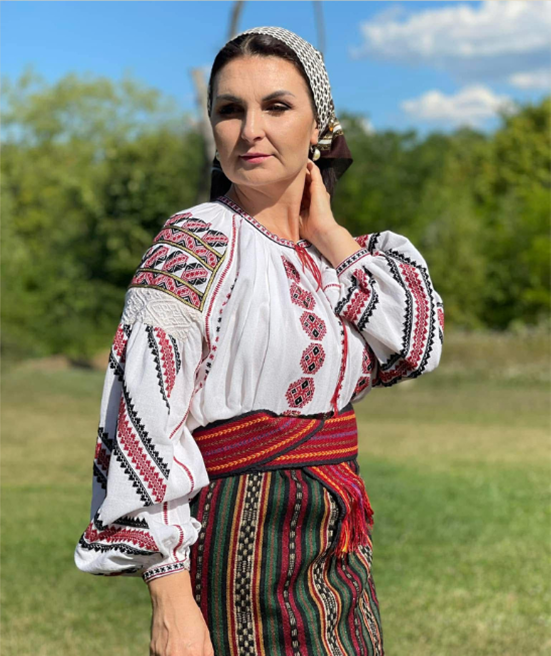
Cămașa are cusute în altițe suveicuțe, sunt simbolurile mișcării, a implicării, a lucrurilor făcute la timp. Încrețul este realizat funcțional având simbolul femei cu poalele în brâu, simbol al femeii puternice.
Mânecile sunt despre urcare, având cusute pe ele coloana infinitului, însemnând urcarea in siguranță, pas cu pas și treapta cu treapta, protecție și ocolirea primejdiilor. Cămașa are mai multe straje, cea mai importantă e sub braț și e ochiul lui Dumnezeu. Este cusaută cu fire de bumbac pe pânză de casă.
Cămașa și poalele sunt create de către Diana Meaun, iar brâul de către Veaceslav Filimon. Fota este creația unei meșterițe populare din Moldova.
₠
Die Bluse ist mit kleinen Nähten verziert, die Symbole für Bewegung, Engagement und pünktliches Handeln. Im Schulterbereich ist die Raffung funktional gestaltet und trägt das Symbol einer Frau mit einem Gürtel um die Hüften, das Symbol einer starken Frau.
Die Ärmel stehen für den Aufstieg, auf ihnen ist die Unendlichkeitsspirale aufgestickt, die für den sicheren Aufstieg, Schritt für Schritt und Stufe für Stufe, für Schutz und das Umgehen von Gefahren steht. Die Bluse hat mehrere „Wächter“, der wichtigste befindet sich unter dem Arm und ist das Auge Gottes.
Es wurde mit Baumwollfäden auf Hausleinen genäht. Die Bluse und der Unterrock wurden von Diana Meaun entworfen, das Gürtelband von Veaceslav Filimon. Die „fota“ = Überrock ist das Werk einer Volkskünstlerin aus Moldawien.
₠
The blouse is decorated with small stitches, which are symbols of movement, commitment, and timely action. In the shoulder area, the gathering is functionally designed and bears the symbol of a woman with a belt around her waist—the symbol of a strong woman.
The sleeves represent ascension, embroidered with the infinity spiral, which stands for a secure ascent, step by step and level by level, as well as for protection and the bypassing of dangers. The blouse features several "guardians," the most important of which is located under the arm and represents the Eye of God.
It was sewn with cotton threads on homespun linen. The blouse and the underskirt were designed by Diana Meaun, while the belt sash (brâu) was crafted by Veaceslav Filimon. The fota (overskirt) is the work of a folk artist from Moldova.
Cămașă de bărbat cusută de mână ~ Handbesticktes Herrenhemd ~ Hand-embroidered men's shirt
Cămașă de bărbat, cusută tradițional, pe pânză de casă, din in și bumbac. Este cusute cu fire mouline de bumbac, în tehnicile: puncturi, la fir, obânzeli, cheițe.
Modelul cuprinde semne precum bobocul, spirala, triunghiu, coarnele berbecului. Predomină simbolul spiralei - reprezintă evoluția, ciclurilor vieții, creșterii și energiei dinamice și coarnele berbceului - ce reprezintă forță, virilitate, fertilitate. Pe spate, este cusută o strajă, pentru protecția purtătorului și reprezintă un simbol tradițional din zona Transilvaniei. Cămașa este creată de către Irina Briceag, iar brâul este țesut tradițional din lână de către meșterița Svetlana Paladi.
₠
Traditionell genähtes Herrenhemd aus Leinen und Baumwolle. Es ist mit Baumwollgarn in den Techniken Punkt, Faden, Obânzeli und Cheițe genäht.
Das Muster umfasst Symbole wie die Knospe, die Spirale, das Dreieck und die Widderhörner. Das Symbol der Spirale dominiert – es steht für Entwicklung, Lebenszyklen, Wachstum und dynamische Energie – und die Widderhörner – sie stehen für Kraft, Männlichkeit und Fruchtbarkeit. Auf der Rückseite ist zum Schutz des Trägers ein Wächter aufgestickt, ein traditionelles Symbol aus Siebenbürgen darstellt.Das Hemd wurde von Irina Briceag entworfen, der Gürtel wurde von der Handwerkerin Svetlana Paladi traditionell aus Wolle gewebt.
₠
A traditionally sewn men's shirt made of linen and cotton. It is embroidered with cotton thread using the punct (stitch), fir (thread), obânzeli, and cheițe (decorative tacks/joins) techniques.
The pattern includes symbols such as the bud, the spiral, the triangle, and the ram's horns. The symbols dominating the design are the spiral—representing development, life cycles, growth, and dynamic energy—and the ram's horns, which signify strength, masculinity, and fertility. A "guardian" is embroidered on the back to protect the wearer, representing a traditional symbol from Transylvania.
The shirt was designed by Irina Briceag, and the belt was traditionally woven from wool by the artisan Svetlana Paladi.
Wir benötigen Ihre Zustimmung zum Laden der Übersetzungen
Wir nutzen einen Drittanbieter-Service, um den Inhalt der Website zu übersetzen, der möglicherweise Daten über Ihre Aktivitäten sammelt. Bitte überprüfen Sie die Details in der Datenschutzerklärung und akzeptieren Sie den Dienst, um die Übersetzungen zu sehen.